
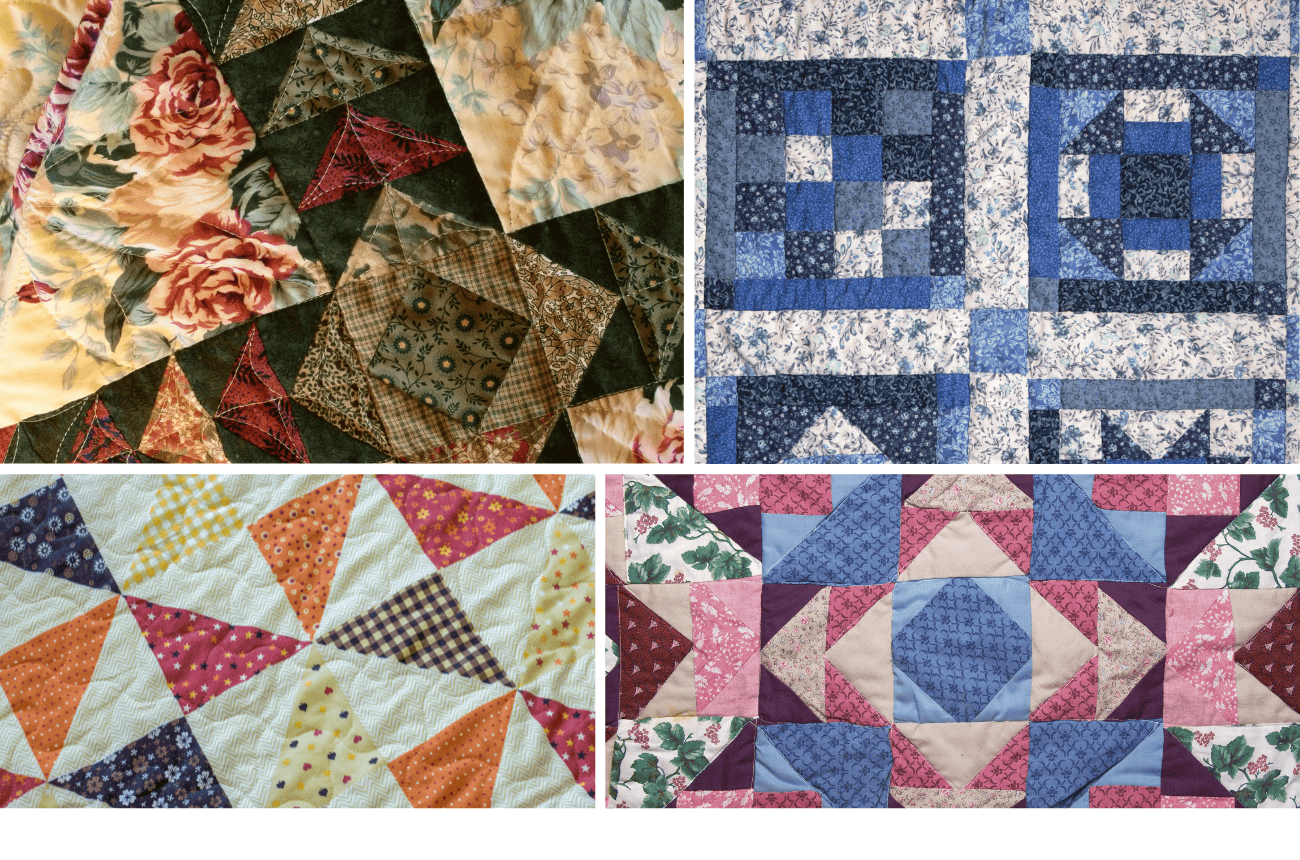
Quilt patterns have long been part of life in the Appalachian Mountains. In the early days, quilts were not made for decoration. They were made because families needed warmth. Early settlers had very few clothes and little extra fabric. Bed coverings were hard to come by, so women saved every usable scrap from worn garments and sewing projects to make patchwork quilts.
Before long, quilting became more than a necessity. As scraps were sewn together, women noticed that certain arrangements were pleasing to the eye. By placing pieces in specific ways, they could create patterns that brought beauty into their homes, something that was often in short supply in colonial times.
Quilt patterns were shared wherever women gathered, after church, in town, or while shopping. A woman might describe a new pattern she was working on and sketch it on any scrap of paper she had. By the time she reached home, she might forget exactly how the pieces fit together, or even the name of the pattern. She would simply fix it the best she could and give it a name of her own. That is why so many quilt patterns exist today, many of them similar, with many different ways to set the same blocks together.
One of the simplest and most well-known patterns is the Flying Geese. It is made from a triangle set inside a rectangle and is easy to piece together. Flying Geese blocks can be placed side by side, stacked, or arranged in long rows. They can even be set in a gentle curve. Many quilters use bird-colored triangles with blue backgrounds, showing dark birds flying across an open sky.
The Flying Geese remind us of our beautiful mountains and the geese that fly over them. Geese are known to be spirited birds and good watch animals. In many ways, they reflect the Appalachian people, much alike, yet each one different.
s why Southern Appalachian Creations chose the Flying Geese as its logo. Like the pattern, SAC is rooted in tradition and shaped by the creators we represent. We share a deep love for beauty, craftsmanship, and the arts, and we are proud to carry these traditions forward, just as quilt patterns have always been passed from one generation to the next.