
People
Josh Carpenter

8 Arts-Focused Places to Visit in Southern Appalachia This Summer

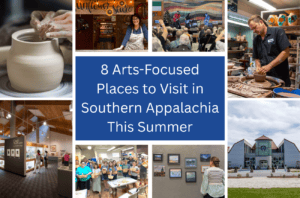
Summer has a way of calling families out onto the road. The children are out of school, the days are long, and even the grown-ups start looking for a reason to wander a little. Here in Southern Appalachia, we do not have to look far to find beauty. It is in the mountains, the music, the pottery, the quilts, the glass, the stories, and the hands of people who still know how to make something worth keeping. So, if you are planning a summer adventure, I hope you will make room for a few places where art and heritage are still alive. These are not just places to pass through. They are places to slow down, look closely, and remember that creativity has always been part of mountain life. Alabama: Mentone Arts & Shops — Mentone, Alabama Perched on Lookout Mountain, Mentone is the kind of little mountain town that invites you to slow down, wander, and look in the windows. You can find locally owned shops, artisan boutiques, art galleries, gift shops, and handmade treasures tucked into a town that still feels personal and welcoming. Learn More Georgia: Folk Pottery Museum of Northeast Georgia — Sautee Nacoochee, Georgia The Folk Pottery Museum of Northeast Georgia tells the story of pottery as one of the South’s great grassroots art forms. Located on the campus of the Sautee Nacoochee Center, the museum shares the history and changing role of folk pottery in Southern life. Learn More South Carolina: Hagood Mill Historic Site — Pickens, South Carolina Hagood Mill in Pickens is one of those places where history, music, and handcraft all meet in one setting. The site helps preserve upcountry life and culture, and its Third Saturday events bring together live demonstrations, traditional folk arts, music, and community. Families can explore the old mill, visit the petroglyph site, shop in the gift shop, and meet people who care about keeping old ways alive. Learn More North Carolina: Folk Art Center — Asheville, North Carolina The Folk Art Center on the Blue Ridge Parkway is a treasure for anyone who loves Southern Appalachian art. It is home to the Southern Highland Craft Guild and features traditional and contemporary art, exhibitions, demonstrations, a craft library, and the Allanstand Craft Shop. In season, visitors may watch artisans at work and talk with them about what they are making. Learn More Tennessee: Great Smoky Arts & Crafts Community — Gatlinburg, Tennessee In Gatlinburg, the Great Smoky Arts & Crafts Community offers a whole trail of makers, studios, and shops. Visitors can find pottery, woodwork, paintings, jewelry, and other handmade goods, while also seeing artisans use skills passed down through generations Learn More Kentucky: Appalachian Artisan Center — Hindman, Kentucky The Appalachian Artisan Center in Hindman is doing the kind of work that matters deeply to communities like ours. It supports area craft artisans, offers learning opportunities, and serves as an anchor for the creative economy in Eastern Kentucky. A visit here is not just about seeing art. It is about seeing how art can help a community hold onto its heritage. Learn More West Virginia: Tamarack Marketplace — Beckley, West Virginia Tamarack Marketplace in Beckley shows creations by West Virginia artists from across the state, with handmade work, local food, and an Appalachian restaurant. Learn More Virginia: Southwest Virginia Cultural Center & Marketplace — Abingdon, Virginia The Southwest Virginia Cultural Center & Marketplace in Abingdon shows regional art through ’Round the Mountain, Southwest Virginia’s artisan network, and also serves as the headquarters of The Crooked Road, Virginia’s heritage music trail. Learn More Southern Appalachia has always been rich, though not always in the ways people think. We are rich in stories. Rich in culture. Rich in hands that know how to make useful things beautiful. So this summer, take the children, pack a lunch, drive the mountain roads, and go see what our people have made. You may come home with a basket, a bowl, a piece of pottery, or a song in your head. But more than that, you may come home remembering that our culture is still very much alive.

Read More »
People
Josh Carpenter

The King of England Visits Appalachia

There’s something special about seeing someone truly stop and appreciate the mountains. Recently, King Charles III visited Shenandoah National Park in Virginia, where he spent time with park rangers, met with Junior Rangers, and honored a new conservation partnership between Shenandoah and the Cairngorms in Scotland. It wasn’t a grand speech or flashy event that stood out most. It was the simple act of slowing down long enough to recognize the beauty and importance of the natural world. For more than 50 years, King Charles has spoken about conservation and caring for the land. Long before it was popular, he worked to protect nature and even converted his estate to organic farming back in the 1980s. Whether people agreed with him or not, he remained committed to the belief that the land matters and that stewardship is something worth passing down to future generations. Folks here in Appalachia understand that kind of thinking. The mountains have always taught us that the land is something to care for, respect, and preserve. The forests, rivers, trails, and quiet places tucked away in these hills carry stories, memories, and traditions that shaped generations before us. Places like Shenandoah remind us that nature is more than scenery. It’s where families gather, where children learn wonder, where old stories are shared on porches, and where people go when they need peace and quiet from a noisy world.

Read More »
People
Josh Carpenter

Caring for Appalachia, One Cartridge at a Time

With Earth Day coming around each spring, I find myself thinking a little more about the land we call home here in Appalachia. These mountains, the streams, the quiet back roads, they’ve taken care of us for generations. It only feels right that we take care of them, too. One small way we’ve been doing that at SAC is by collecting used print cartridges. Instead of letting them end up in a landfill, we send them off through a recycling program where they can be reused or properly processed. What’s been a blessing is that those cartridges don’t just get recycled, they also bring in a bit of funding for SAC. It’s not anything fancy, just a simple, steady way to support the work we’re doing while also being mindful of the environment. It’s a good reminder that caring for our region doesn’t always have to be big or complicated. Sometimes it looks like holding onto something small, making sure it’s put to good use, and letting it serve a greater purpose. That feels like a fitting way to honor Earth Day, and the place we’re all proud to call home.

Read More »
People
Josh Carpenter

2026 Yellow Daisy Arts and Crafts Festival is looking for exhibitors

If you love handmade things such as quilts, pottery, woodwork, jewelry, and all the good stuff, here’s something pretty cool you might want to know about. The Appalachian Arts & Crafts Fair is getting ready for another year, and they’re looking for local artists and makers to be part of it. This fair has been around a long time and brings together folks from all over Appalachia who love creating things with their hands. It’s the kind of place where you can walk the aisles, meet the people who made the work, hear their stories, and maybe even learn a thing or two about how it’s done. Whether someone’s been crafting for years or just getting started, this fair is a great way to share your work and connect with others who care about Appalachian art and tradition. If  you are interested, the Yellow Daisy Arts and Crafts Festival will be held at Stone Mountain Park in Stone Mountain, Georgia, from September 10–13, 9 AM to 5 PM each day. It’s a well-loved festival sponsored by the Georgia Department of Economic Development, and it’s a wonderful place for makers to meet new folks and share their work. If you’d like more details, you can reach out at exploregeorgia@georgia.org. If you’ve ever thought, “Maybe I could do something like that,” this might be your sign. And even if you’re not an artist yourself, it’s just nice to know these kinds of events are still keeping our mountain creativity alive and well.

Read More »
People
Josh Carpenter

The Flying Geese: A Quilt Pattern with Appalachian Roots

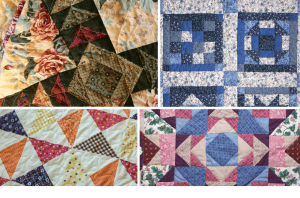
Quilt patterns have long been part of life in the Appalachian Mountains. In the early days, quilts were not made for decoration. They were made because families needed warmth. Early settlers had very few clothes and little extra fabric. Bed coverings were hard to come by, so women saved every usable scrap from worn garments and sewing projects to make patchwork quilts. Before long, quilting became more than a necessity. As scraps were sewn together, women noticed that certain arrangements were pleasing to the eye. By placing pieces in specific ways, they could create patterns that brought beauty into their homes, something that was often in short supply in colonial times. Quilt patterns were shared wherever women gathered, after church, in town, or while shopping. A woman might describe a new pattern she was working on and sketch it on any scrap of paper she had. By the time she reached home, she might forget exactly how the pieces fit together, or even the name of the pattern. She would simply fix it the best she could and give it a name of her own. That is why so many quilt patterns exist today, many of them similar, with many different ways to set the same blocks together. One of the simplest and most well-known patterns is the Flying Geese. It is made from a triangle set inside a rectangle and is easy to piece together. Flying Geese blocks can be placed side by side, stacked, or arranged in long rows. They can even be set in a gentle curve. Many quilters use bird-colored triangles with blue backgrounds, showing dark birds flying across an open sky. The Flying Geese remind us of our beautiful mountains and the geese that fly over them. Geese are known to be spirited birds and good watch animals. In many ways, they reflect the Appalachian people, much alike, yet each one different. s why Southern Appalachian Creations chose the Flying Geese as its logo. Like the pattern, SAC is rooted in tradition and shaped by the creators we represent. We share a deep love for beauty, craftsmanship, and the arts, and we are proud to carry these traditions forward, just as quilt patterns have always been passed from one generation to the next.

Read More »
People
Josh Carpenter

Honoring a Mountain Tradition and a Man Who Lived It

In Southern Appalachia, coon hunting has long been a special part of mountain life. One man who loved this tradition was Earl Dotson, a local veteran known for his kindness and strength.  As a young man, Earl served in the Army during World War II and was badly wounded. Even though walking was painful, he raised a family and still found joy in caring for his coon dogs. He taught his daughters how to look after animals and often helped others whose dogs were hurt or sick. Earl shared what he knew freely and gave his time to anyone who needed help. He was a good neighbor who always had time for people, especially young ones who needed advice. Many remember how he helped them make better choices and reminded them that a broken heart would heal. His gentle nature and giving spirit showed what it means to live with love, courage, and faith. It is stories like his that represent the best of us, men and women who sacrificed for their country and their people, and who continue to show us what it means to live with honor and love for our community.  As we celebrate Veterans Day, we remember that many of our heroes didn’t just serve with honor across the water. They came home and served here too, teaching us what it means to be a good neighbor and a proud Appalachian.  Join us in honoring our veteran neighbors and the lasting example they’ve given to us mountain folk.

Read More »
People
Josh Carpenter

Doris Hunter: Turning Pinecones into Art

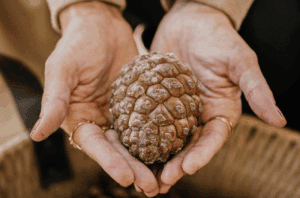
Doris Hunter has a gift for turning simple elements of nature into beautiful works of art. Using pinecones, twigs, mountain laurel, and bits of driftwood, she has created detailed works of art such as bird sculptures that look as though they could take flight at any moment. Each piece is a testament to her love of the Appalachian Mountains and the nature that surrounds her home in North Carolina.Doris began making her pinecone birds back in 1973. What started as a creative pastime soon became a lifelong career. Her work has been displayed across the region, even reaching national recognition when she was chosen to decorate the White House Christmas tree in 2002. One of her pieces now rests in the Smithsonian Institute, a lasting tribute to her craftsmanship and dedication.Along with being an artist, Doris is also behind the Mountain Artisans Craft Shows, where local makers can share their work. One of her most popular events is “Hard Candy Christmas,” held every year on the Thanksgiving weekend at the WCU Ramsey Center in Cullowhee, North Carolina. Her Christmas-themed event has now become a mountain tradition, drawing artists and visitors from all over.Through her passion for arts and crafts, Doris Hunter continues to encourage others to find beauty in the ordinary.

Read More »
People
Josh Carpenter

Asheville Celebrates 100 Years of Country Music History

In 1925, musicians gathered at the George Vanderbilt Hotel in downtown Asheville, North Carolina, to record songs that had never before been heard outside the Blue Ridge Mountains. Fiddlers, banjo players, and singers came together to share the music they grew up with. These recordings, now known as the Asheville Sessions, were the first commercial effort to capture Appalachian folk traditions. They helped shape the sound that would later grow into Bluegrass and country music. This year, Asheville is honoring that moment with a centennial celebration and the release of Music from the Land of the Sky: The 1925 Asheville Sessions. The new album includes 28 songs that have been restored from the original discs. For the first time in a hundred years, listeners will be able to hear the details and voices that defined this beautiful period in Appalachian history. For Appalachia as a whole, this project is a reminder that the voices of our people matter. At a time when the region was often overlooked, these recordings gave the world a window into life in the hills. These songs of our past carry stories of our culture for future generations. They preserve traditions that might have been forgotten and show the richness of a culture that outsiders often misunderstand. By bringing these songs back to life, Asheville is also reminding people that Appalachian music still has an audience today. The same spirit that filled those hotel rooms in 1925 continues in the musicians who play in Asheville now.   The release of this album is a chance for the wider world to see how deeply Appalachia has shaped American music and honor the people who boldly shared the culture of our community with the world. More information and album preorders are available at AshevilleSessions.com.

Read More »
People
Josh Carpenter

Joyce Brookshire’s Legacy will now live on in the small Atlanta neighborhood of Cabbagetown

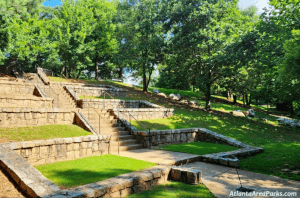
Joyce Brookshire (1941–2017) was a songwriter, activist, and storyteller who cared deeply about her Appalachian heritage. Born in the mountains of northeast Georgia, her journey took her to Atlanta’s Cabbagetown, where her life and music reflected both rural roots and city life. Highlights of Joyce’s Life: Moved with her family to Cabbagetown, living in a small $11/month mill house. Wrote her first song at only 10 years old. Sang with bands and made several solo albums, including work on the Foxfire label. Worked at The Patch, helping kids in crisis. Spoke out through her music and her actions for human rights and justice. Remembered by friends for her gift of saying in song what could not be said in words. Joyce’s story is closely tied to Cabbagetown itself, the place she called home most of her life. Though only one square mile, Joyce embodied the creative artistic spirit of this town, and her music continues to inspire people today. To honor her memory, the community is building the Joyce Brookshire Memorial Amphitheatre, a new space that will keep her love for music, justice, and community alive for years to come.

Read More »
Culture
Josh Carpenter

The Lost Town of Kentuck, Alabama: A Mystery of Early Map-Making

In the heart of Alabama lies a town with a fasinating and somewhat familiar history. While it might sound like an old, forgotten place, Kentuck has a rich history tied to the early days of map-making. This history shows how small towns like Kentuck almost disappeared from maps—and from memory. Back when making maps was a careful mix of art and science, small communities often got left off maps or had their names changed by mistake. Mapmakers would update maps all the time, sometimes adding new places and sometimes leaving others out. Kentuck was one of the places affected by these changes. It showed up on some maps but was left off others, making it seem like it was in a strange “in-between” state. Over time, Kentuck became less of a place people visited and more of a local legend. Today, Kentuck’s story is kept alive by the Kentuck Art Festival, held every year to celebrate the town’s folk and fine art. This festival brings people together to remember Kentuck’s history and its place in Alabama. The festival shows honors Kentuck as a special part of Alabama’s past and celebrates the community that has kept it alive.

Read More »